

Everything That Changed for Georgia Site Prep and Demolition in 2026 (And Why Your Contractor Should Already Know)
- Ajasa Samuel
- Apr 20
- 6 min read

jkbi
On January 1, 2026, the rules changed. If you're planning any site development work in Middle Georgia this year, you need to know what's different, because most of the contractors quoting you right now are still operating like it's 2025.
Three big things shifted between December and March
I'll say this up front: the construction industry doesn't love talking about regulations. Most homeowners don't want to hear about them either. But 2026 has brought three changes to Georgia's site development rules that affect the cost, timeline, and legality of basically every project you might plan this year.
You don't need to understand them in full. You just need to know enough to ask your contractor one question: “Are you working under the 2024 IBC with state amendments, and are you following the March 2026 septic manual?” If you get a blank look, keep shopping.
Change #1: Georgia adopted the 2024 International Building Code
The Georgia Department of Community Affairs officially adopted the 2024 International Building Code with state amendments on January 1, 2026. For residential projects, that means new rules around footings, foundations, drainage, and structural requirements. For commercial projects, the changes are more extensive.
The part that matters most for site prep and demolition: the code now has tighter requirements around soil classification and building pad preparation. A Georgia-licensed Professional Engineer or NICET Level II inspector now has to verify soil compaction before foundation work in certain project types. If your contractor is still using the 2018 IBC framework , and some are, because that's what they got certified under years ago , you will fail inspection.
Failing inspection doesn't just delay your project. It costs you. Baldwin County building inspections run on a 24 to 48 hour turnaround under normal conditions. If your footings don't pass, you're rescheduling, redoing, and paying for both.
The code change is quiet. The Georgia DCA didn't send a mailer to every homeowner in the state. But any contractor actively working in this industry should have completed their continuing education by the end of last year. If they can't name the 2024 IBC when you ask, that's a red flag.
Change #2: The Georgia septic manual was updated in March
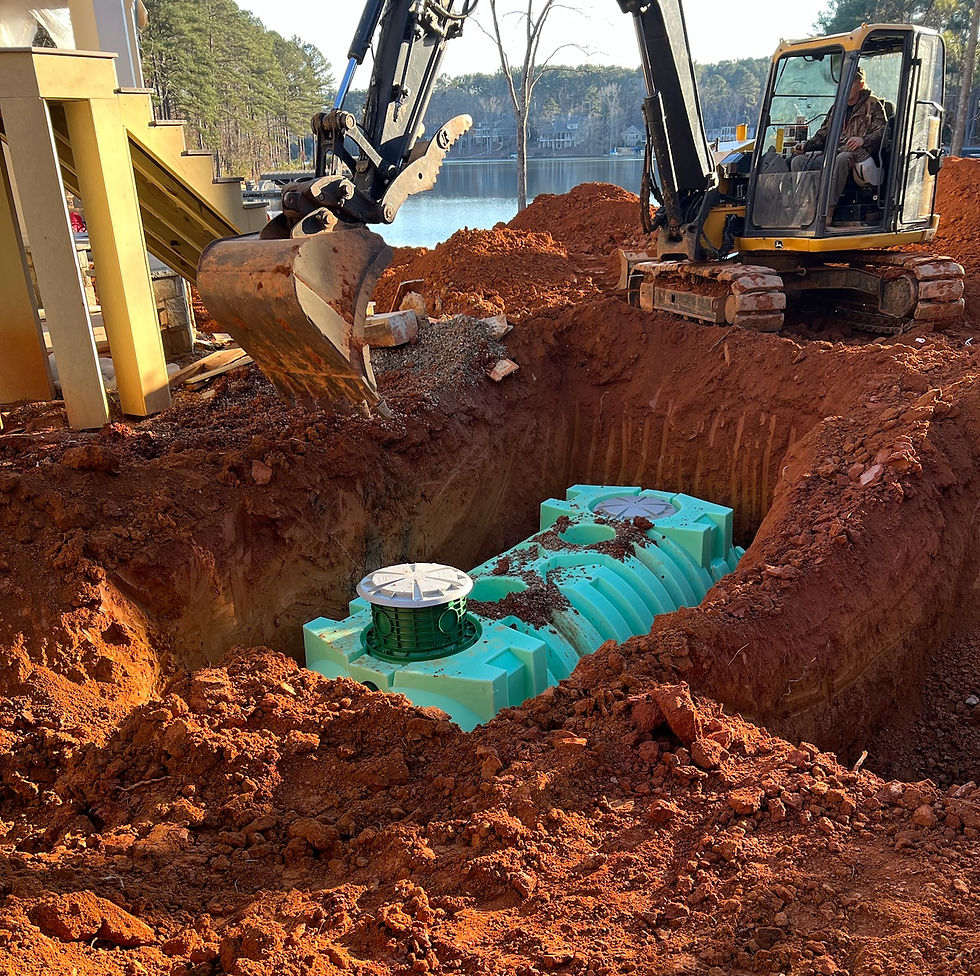
The Georgia Department of Public Health published an updated Manual for On-Site Sewage Management Systems in March 2026. It's 283 pages, and it governs every new septic installation and major septic modification in the state.
The headline change for homeowners: the old-fashioned percolation test is out. A Level 3 Soil Report by a State of Georgia Certified Soil Classifier or Soil Scientist is now the standard before any new septic permit is issued. This isn't a minor procedural swap. A Level 3 report looks at the entire soil profile , depth, texture, drainage characteristics, and seasonal water table , and determines what kind of system your property can actually support.
Some properties that would have passed a perc test under the old rules don't qualify for a conventional septic system under the new standards. That's a big deal. If you're buying land with the plan to build, and you've been told “soil looks fine for septic,” get a Level 3 report before you close. I've watched buyers lose thousands because the old perc assumption didn't hold up.

What the new manual actually means for your project
New installations require the Level 3 report. No exceptions for residential.
Septic tank capacity rules now require two-compartment tanks in most configurations. The first compartment must be at least two-thirds of the liquid capacity.
Setback distances are enforced more strictly. Tanks at least 50 feet from wells, 25 feet from lakes, ponds, and streams, 10 feet from property lines.
Baldwin County's Environmental Health office on Ireland Drive charges $100 for a septic permit and requires a site evaluation before issuance. Plan on that taking a couple of weeks, depending on soil classifier availability.
Change #3: Erosion control enforcement is tighter than it's been in years
Georgia's Erosion and Sedimentation Act has been law since 1975. What's different in 2026 is enforcement. The Georgia EPD has been increasing the frequency of site inspections, especially in counties that have had repeat violations. If your project disturbs one acre or more, you need an NPDES permit filed through the GEOS portal at least fourteen days before work begins.
The permit fee is $40 to $80 per disturbed acre depending on whether Georgia EPD or your local municipality is the issuing authority. That's not the expensive part. The expensive part is what happens if you don't have the permit.
Fines under the Erosion and Sedimentation Act can run per day for non-compliant sites. Sediment that leaves your property and reaches a stream, lake, or stormwater system can trigger enforcement from both county and state authorities. In some cases, property owners have been required to fund off-site stream restoration , and that cost is not small.
The bigger cost is usually the timeline. Projects that fail erosion control inspection delay certificate of occupancy. Residential sales don't close. Commercial projects don't open. I've watched a planned three-week excavation job turn into a two-month saga because the initial erosion controls weren't up to the current standard.

What this looks like from your side of the conversation
You're not expected to be an expert on any of this. You're just expected to hire one. The easiest way to tell whether you're working with a contractor who's actually up to date is to ask them four questions when they come out to quote your project:
"Are you familiar with the 2024 IBC state amendments for Georgia?" If yes, they'll tell you specifically what changed for footings and foundations. If no, move on.
"Will this project need a Level 3 soil report?" For septic and building pad work, the answer should be yes with an explanation of why.
"How many acres will be disturbed, and do we need an NPDES permit?" They should be able to estimate this from walking the site. Under one acre, no permit. Over one acre, they handle the filing.
"Who pulls the Baldwin County building permit, and what's your lead time?" Good contractors handle the paperwork. They should know the Wilkinson Street office personally.
What's actually different on the ground
I want to be honest about what these changes really mean on a day-to-day project. Most of this is procedural. The work itself , the digging, the hauling, the grading, the pouring , hasn't fundamentally changed. What's changed is the documentation around it, and the expectations about how the work is inspected and approved.
For a homeowner, that mostly shows up in two places. First, your project takes slightly longer on paper than it used to, because the pre-work phase , soil classification, permit filing, inspection scheduling , involves more steps. Second, your contractor's experience matters more than it used to, because the margin for shortcuts is narrower.
A contractor who cut corners under the old rules will fail faster under the new ones. That's actually good news for you.
The Area Solutions position on all this
We've been doing this work in Middle Georgia for over fifty combined years between the crew. Owen ran projects for a decade under Steve Renfroe before buying the company in 2024. Steve himself has been grading these roads for over forty years. The regulatory changes in 2026 didn't catch us off guard because we've been tracking them through Georgia Soil and Water Conservation Commission updates since late last year.
We carry certifications through the Georgia Soil and Water Conservation Commission for erosion control work. We're licensed for septic installation in both Georgia and South Carolina. We pull our own permits at the Baldwin County offices, which means we can give you a realistic timeline based on what we're actually seeing at the permit desk , not an optimistic guess based on how it used to work.
Most importantly, we'll tell you when a project doesn't make sense. If the soil on your property won't support a conventional septic system under the new Level 3 standards, we'll tell you before we start digging. If the site conditions mean you should wait until after the summer rain pattern to break ground, we'll say that too. It's not good business to take on a job that's going to fail inspection.
Your next move
If you've got a project in the planning stage, the single most valuable thing you can do right now is get a proper walk-through of your property from a contractor who actually knows the 2026 rules. Not an over-the-phone quote. Not a referral from a builder who hasn't been on your land. A walk-through, with eyes on the dirt.
We offer those assessments free across Middle Georgia. They take about an hour. At the end, you'll know what your project actually involves, what permits you need, what the timeline looks like under current conditions, and what it's going to cost. If you want to shop it to other contractors after that, we don't mind. Good information is still good information.
Need a contractor who knows the 2026 rules?
Call Area Solutions: (478) 251-5800areasolutionsga.com


Comments